You’re working with sensitive electronics, and you know that static discharge can ruin your components in seconds. Choosing the right ESD-safe soldering tip isn’t just about heat transfer—it’s about maintaining low impedance and protecting your circuit boards. We’ve identified five top contenders for 2026 that’ll transform your soldering game. Let’s see which one’s the perfect fit for your workspace.
| I.C. Tip Tinner for Soldering Tip Restoration (1.5oz) |  | Restoration Specialist | Product Type: Soldering tip restoration compound | Primary Function: Removes oxidation and restores tin layer | Tip Geometry/Style: N/A (restoration compound) | CHECK ON AMAZON | Read Our Analysis |
| Tip Tinner For Soldering Iron Tip Cleaning Supplied By Wonderway |  | Quick Repair Solution | Product Type: Soldering tip restoration paste | Primary Function: Repairs and maintains soldering tips | Tip Geometry/Style: N/A (restoration paste) | CHECK ON AMAZON | Read Our Analysis |
| Weller ET Soldering Iron Replacement Tips (6-Pack) | 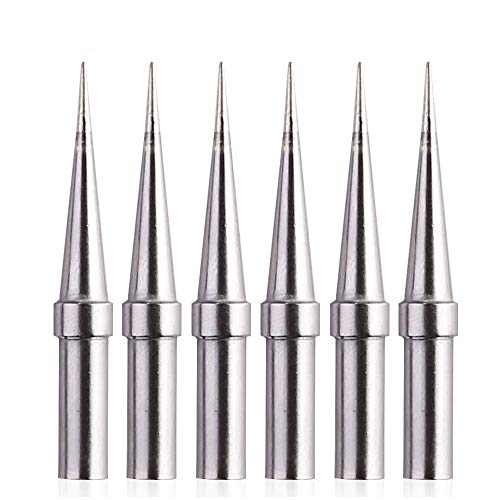 | Budget Replacement Pack | Product Type: Replacement soldering tips (6-pack) | Primary Function: Direct tip replacement | Tip Geometry/Style: Conical tips | CHECK ON AMAZON | Read Our Analysis |
| Hakko 900M Soldering Iron Tips Set (5-Pack) |  | Premium Compatibility Choice | Product Type: Replacement soldering tips (5-pack) | Primary Function: Direct tip replacement | Tip Geometry/Style: Bevel tip (chisel head) | CHECK ON AMAZON | Read Our Analysis |
| ET Soldering Tips Replacement for Weller Tools (5-Pack) | 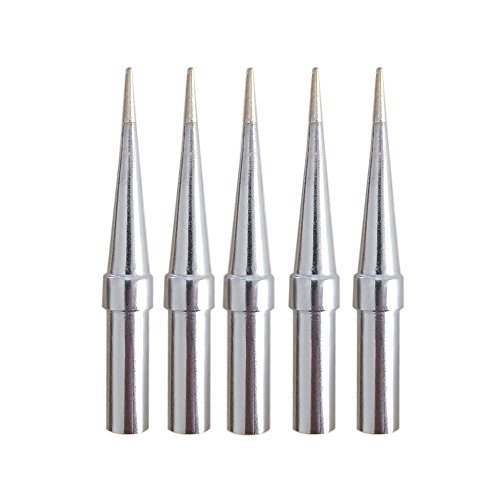 | Precision Micro-Soldering Tip | Product Type: Replacement soldering tips (5-pack) | Primary Function: Direct tip replacement | Tip Geometry/Style: Round, fine tip | CHECK ON AMAZON | Read Our Analysis |
More Details on Our Top Picks
I.C. Tip Tinner for Soldering Tip Restoration (1.5oz)
If you’re soldering in professional or cleanroom environments where precision and safety matter, I.C. Tip Tinner restores your soldering tips to peak performance. This lead-free, RoHS-compliant formula removes flux, rust, and oxidation while applying a premium tin layer that enhances heat transfer. You’ll restore full tip functionality instantly—just press your heated tip into the tinner and clean. The non-corrosive, residue-free composition leaves no harmful buildup, making it ideal for demanding applications. The 1.5oz ESD-safe can features adhesive backing for convenient workstation mounting, ensuring you’ve got tip restoration readily available whenever you need it.
- Product Type:Soldering tip restoration compound
- Primary Function:Removes oxidation and restores tin layer
- Tip Geometry/Style:N/A (restoration compound)
- Material Composition:Lead-free, mercury-free
- Environmental/Safety Compliance:Lead-free, RoHS compliant
- Quantity per Package:1 (1.5oz can)
- Additional Feature:ESD-safe adhesive-backed can
- Additional Feature:Removes flux, rust, oxidation
- Additional Feature:Residue-free professional application
Tip Tinner For Soldering Iron Tip Cleaning Supplied By Wonderway
Soldering professionals who need reliable tip maintenance between projects will find Wonderway’s tip tinner indispensable for keeping their tools in peak condition. This paste-like substance delivers strong adhesion that effectively fills damaged tip areas and restores heating capability quickly. You’ll appreciate how it prevents metal oxidation, greatly extending your soldering tip’s lifespan. The formula withstands high temperatures while maintaining structural integrity, so your tips perform consistently under demanding conditions. Its convenient packaging makes storage effortless and spoilage-resistant, while the easy application process streamlines your maintenance routine and boosts efficiency. Whether you’re working on intricate electronics or routine repairs, this tip tinner guarantees you’re always ready to solder.
- Product Type:Soldering tip restoration paste
- Primary Function:Repairs and maintains soldering tips
- Tip Geometry/Style:N/A (restoration paste)
- Material Composition:High-temperature resistant paste
- Environmental/Safety Compliance:Safe, durable storage
- Quantity per Package:1 (paste container)
- Additional Feature:Paste-like substance consistency
- Additional Feature:Long-term storage resistant
- Additional Feature:Prevents metal oxidation
Weller ET Soldering Iron Replacement Tips (6-Pack)
For technicians working with densely packed circuit boards, the Weller ET Soldering Iron Replacement Tips (6-Pack) offers precision that won’t compromise your components. These conical tips, featuring a .02/5mm width, fit popular Weller models including WESD51, WES51, WES50, and WE1010NA, plus additional irons like PES50, PES51, and LR21. Manufactured from quality materials and RoHS-approved, they deliver extended service life through rigorous use. You’ll appreciate their versatility across general soldering applications, particularly when working in high-density component areas where accuracy matters most. IGREAT’s professional manufacturing guarantees reliability, making this six-piece set an essential addition to your soldering toolkit.
- Product Type:Replacement soldering tips (6-pack)
- Primary Function:Direct tip replacement
- Tip Geometry/Style:Conical tips
- Material Composition:Quality material, RoHS approved
- Environmental/Safety Compliance:RoHS approved
- Quantity per Package:6 tips
- Additional Feature:Conical tip geometry design
- Additional Feature:High-density component compatibility
- Additional Feature:Fits 10+ Weller models
Hakko 900M Soldering Iron Tips Set (5-Pack)
You’ll find the 900M-T-3C bevel tips particularly valuable if you’re working with Hakko’s 900M Series soldering stations or compatible models like the 907-ESD, 933, 936, 937, and 942. This five-pack delivers oxygen-free red copper tips with multiple plating layers—iron, chromium, and tin—that enhance heat transfer and work efficiency. The bevel geometry (R3.0mm/45°) handles precision soldering effectively. At 6.5mm outer diameter and 25.5mm base height, these tips fit exactly into compatible stations. You’ll appreciate the durable construction that maintains consistent performance across repetitive soldering tasks, making this set a practical replacement option for professionals and hobbyists alike.
- Product Type:Replacement soldering tips (5-pack)
- Primary Function:Direct tip replacement
- Tip Geometry/Style:Bevel tip (chisel head)
- Material Composition:Oxygen-free copper with iron/chromium/tin plating
- Environmental/Safety Compliance:Not specified
- Quantity per Package:5 tips
- Additional Feature:Triple-layer plating system
- Additional Feature:Adjustable temperature compatible
- Additional Feature:Bevel 45-degree angle design
ET Soldering Tips Replacement for Weller Tools (5-Pack)
When you’re working with fine-detail electronics or micro soldering tasks, these ShineNow ET replacement tips deliver the precision you need. The round, fine 1/32-inch tip excels at general soldering and intricate work. This five-pack fits Weller models including WES51, WESD51, WE1010, PES51, and several others, making them a solid substitute for OEM tips. You’ll appreciate the high-quality materials that provide long service life despite the manufacturer discontinuing this line. At just under half an ounce per pack, they’re lightweight and portable. With Amazon’s 30-day return guarantee backing your purchase, you can confidently upgrade your soldering toolkit.
- Product Type:Replacement soldering tips (5-pack)
- Primary Function:Direct tip replacement
- Tip Geometry/Style:Round, fine tip
- Material Composition:High-quality material
- Environmental/Safety Compliance:Not specified
- Quantity per Package:5 tips
- Additional Feature:Fine round tip design
- Additional Feature:Micro soldering capable
- Additional Feature:1/32 inch precision size
Factors to Consider When Choosing an ESD-Safe Soldering Tip That Maintains Low Impedance at the Iron’s Point
When you’re selecting an ESD-safe soldering tip, you’ll want to evaluate the material composition and conductivity since they directly influence how effectively the tip dissipates static charges. You should also examine the plating layer quality standards and tip geometry, as these factors determine whether your iron maintains the low impedance necessary for proper grounding at the work point. Finally, you’ll need to verify temperature stability performance and compatibility with your existing workstation equipment to guarantee seamless integration and consistent ESD protection.
Material Composition And Conductivity
Selecting a soldering tip with proper material composition directly impacts how well it maintains low impedance at the iron’s point. You’ll want a copper core—preferably oxygen-free red copper—since it provides superior intrinsic conductivity that supports consistently low resistance. The protective plating layers you choose matter equally. Iron, tin, and chromium coatings stabilize the surface and reduce oxidation, preserving that clean, conductive interface essential for efficient heat transfer. Tin plating specifically suppresses oxide formation, keeping your tip’s contact resistance stable during use. By combining a copper core with durable plating, you balance conductivity with wear resistance, preventing impedance increases from surface degradation. Choosing lead-free, RoHS-compliant materials ensures you avoid insulating contaminants while maintaining ideal conductivity throughout your soldering work.
Plating Layer Quality Standards
The plating stack that sits atop your soldering tip’s copper core acts as the critical barrier between electrical conductivity and oxidative degradation. You’ll want to prioritize a uniform, adherent tin plating layer—it’s essential for minimizing impedance fluctuations and sustaining consistent heat transfer.
Look for tips featuring an iron plating layer that provides hardness and wear resistance, protecting against degradation during repeated heating cycles. A chromium diffusion barrier further stabilizes impedance over time while enhancing corrosion resistance.
Verify that your soldering tips carry lead-free, RoHS-compliant plating. This guarantees safe operation in ESD-safe environments and meets modern regulatory standards. These quality standards directly impact your tip’s longevity and electrical performance, making them non-negotiable when selecting equipment for precision soldering work.
Tip Geometry And Design
Beyond the plating layer’s protective qualities, your tip’s geometric shape determines how efficiently heat and electrical current reach the workpiece. Bevel tips create a larger contact area and flatter heating surface, improving heat transfer while maintaining low impedance. Conical tips concentrate heat effectively but can increase thermal resistance if inadequately shielded or cooled, especially with narrow 0.02/5 mm profiles. Round or fine tips (1/32 inch or ~0.8 mm) offer precision for small pads, though their reduced contact area may raise impedance during high-current soldering. You’ll want to match your tip geometry directly to your iron’s current capability and ESD-safe design specifications. This alignment preserves a stable, low-impedance connection at the tip, ensuring reliable performance.
Temperature Stability Performance
How does a soldering tip maintain its low-impedance performance over extended use? You’ll find the answer lies in temperature stability performance. High-temperature endurance preserves structural integrity and consistent impedance as your tip operates at elevated temperatures. Oxidation protection keeps the conductive surface clean, preventing impedance drift during prolonged sessions. Quick repair formulations restore heating ability rapidly after interruptions, returning your tip to low-impedance contact faster. Residue-free, non-corrosive coatings maintain stable conductive pathways, reducing impedance shifts from contamination buildup. Durable tip plating—such as iron, chromium, or tin layers—enhances thermal conductivity and sustains stable impedance through repeated temperature cycling. These factors work together, ensuring your ESD-safe soldering tip delivers reliable, consistent performance throughout its operational life.
Compatibility With Workstation Equipment
Workstation compatibility directly determines whether your ESD-safe soldering tip maintains the low impedance you need for reliable static protection. You must confirm that your replacement tip matches your exact iron model and station specifications. Mismatched geometry or connectors create intermittent contact that raises impedance and compromises ESD protection.
Your tip’s plating and material tolerances must suit your station’s operating current and voltage to prevent impedance drift during use. Additionally, you’ll want to guarantee your workstation features proper grounding and secure tip mounting, establishing a stable low-impedance path throughout operation.
Storage, cleaning, and handling accessories deserve attention too. Any contaminants or residues introduce contact resistance at the tip, degrading performance. Maintain meticulous care to preserve consistent impedance levels.
Long-Term Durability Factors
Over the soldering iron’s operational lifetime, you’ll find that tip durability directly affects your ESD-safe performance. You need durable tip construction that resists oxidation and corrosion, preserving low-impedance paths through repeated use. High-temperature endurance matters too—stable iron and tin plating prevents degradation during heating cycles, maintaining consistent electrical contact as wear accumulates.
You’ll benefit from non-corrosive, residue-free operation that minimizes insulating buildup at the tip. This buildup raises impedance and compromises ESD protection. Strong adhesion and robust tip filling provide the mechanical stability you need for reliable conductivity over time.
Don’t overlook storage stability either. You’ll want tips that resist moisture and chemical exposure, preserving low-impedance performance before and between use. These durability factors ensure your ESD-safe soldering tips deliver consistent protection throughout their service life.
Frequently Asked Questions
How Often Should I Replace My Soldering Iron Tips to Maintain ESD Safety?
You should replace your soldering iron tips every 3-6 months, depending on usage frequency. Regular replacement maintains consistent heat transfer and prevents oxidation that compromises ESD safety. You’ll notice degraded tips produce weaker connections and increased static risk.
What Is the Proper Grounding Procedure for Esd-Safe Soldering Workstations?
You’ll ground your workstation by connecting a wrist strap to a grounded mat, then linking that mat to an earth ground. You should verify continuity regularly and guarantee all components touch the mat properly.
Can I Use Non-Esd Soldering Tips on Sensitive Electronic Components Safely?
You shouldn’t use non-ESD soldering tips on sensitive components. You’ll risk damaging them with static electricity. You need ESD-safe tips that dissipate charge safely and protect your delicate electronics from costly harm.
How Do I Test if My Soldering Iron Is Properly Grounded for ESD Protection?
You can test your soldering iron’s grounding by using a multimeter set to continuity mode. Touch the probe to the iron’s tip and the other to a known ground source. You’ll hear a beep if it’s properly grounded.
What Temperature Settings Are Recommended for Esd-Safe Soldering Without Damaging Components?
You’ll want to set your iron between 350-400°C for most components. Keep it as low as possible while still achieving good solder flow. You should monitor temperature carefully to prevent thermal damage to sensitive parts.