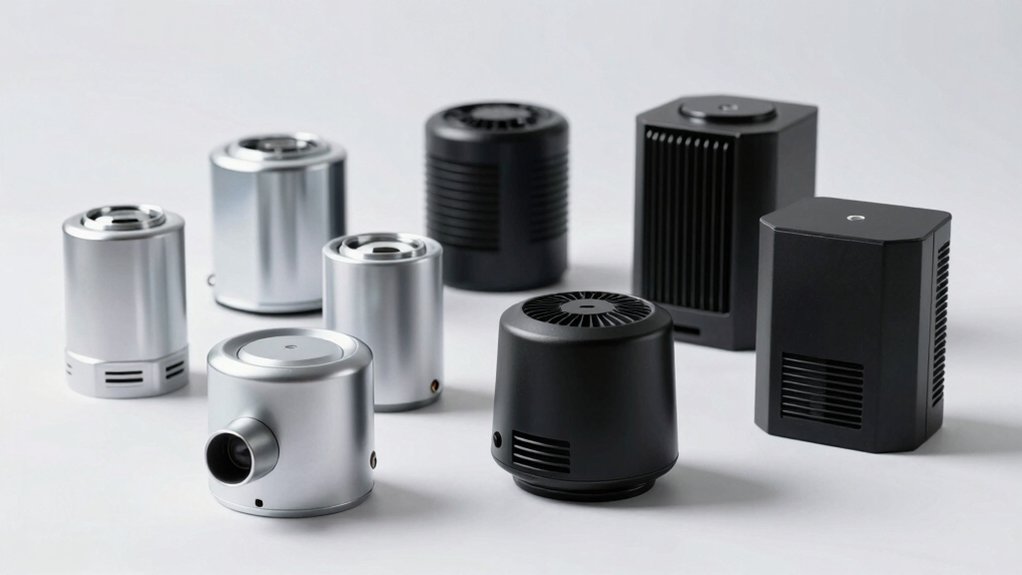
You’re managing large work surfaces where static discharge threatens your operations. Whether you’re handling electronics, vinyl records, or delicate coatings, you need reliable ionization that covers expansive areas without compromise. The right air amplifier balances CFM output, ion stability, and durability. But choosing between 7 kV guns and 110 V blowers isn’t straightforward. What specific factors should guide your decision?
| Ionizing Air Gun 7KV Anti Static for Vinyl Records | 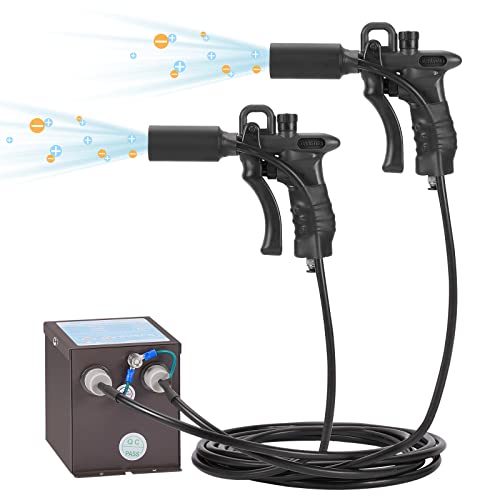 | Professional Grade | Ion Voltage Output: 7KV | Coverage Area: Point-to-point elimination | Airflow Velocity/Volume: >30 L/min at 2-3 bar | CHECK ON AMAZON | Read Our Analysis |
| FEITA Ionizer Air Blower Static Eliminator Fan |  | Best Overall | Ion Voltage Output: Not specified | Coverage Area: 40 cm × 60 cm | Airflow Velocity/Volume: 45–110 CFM | CHECK ON AMAZON | Read Our Analysis |
| Anti Static Ionizing Air Gun with Wide Flat Nozzle |  | Most Precise | Ion Voltage Output: 7KV | Coverage Area: Flat static electricity evenly | Airflow Velocity/Volume: >40 L/min | CHECK ON AMAZON | Read Our Analysis |
| YUCHENGTECH Ionizing Air Blower Static Eliminator ESD (110V) |  | Best Value | Ion Voltage Output: Not specified | Coverage Area: Not specified | Airflow Velocity/Volume: 45–110 CFM adjustable | CHECK ON AMAZON | Read Our Analysis |
| Ionizing Air Blower Static Eliminator Fan 110V |  | Editor’s Choice | Ion Voltage Output: Not specified | Coverage Area: 40 cm × 60 cm | Airflow Velocity/Volume: 45–110 CFM adjustable | CHECK ON AMAZON | Read Our Analysis |
| Bipolar Ionization Air Purifier Module for HVAC |  | Industrial Specialist | Ion Voltage Output: ±3.0KV | Coverage Area: Laboratories, clean rooms, HVAC systems | Airflow Velocity/Volume: Not specified | CHECK ON AMAZON | Read Our Analysis |
| Hanchen Ionizing Air Blower Anti Static Ionizer (110V) |  | Best For Beginners | Ion Voltage Output: Not specified | Coverage Area: 15.7 in × 23.6 in | Airflow Velocity/Volume: 45–110 CFM adjustable | CHECK ON AMAZON | Read Our Analysis |
| ESD Ionizing Air Blower Anti Static Eliminator (110V) |  | Most Versatile | Ion Voltage Output: Not specified | Coverage Area: 15.7 × 35.4 inches | Airflow Velocity/Volume: 90–220 CFM stepless regulation | CHECK ON AMAZON | Read Our Analysis |
| Industrial Ionizing Air Bar 5.6KV Static Eliminator |  | Best Coverage | Ion Voltage Output: 5.6KV | Coverage Area: Sheet-wide workpieces | Airflow Velocity/Volume: Not specified | CHECK ON AMAZON | Read Our Analysis |
| Ionizing Air Gun Static Eliminator Anti-Static (TG2031) |  | Most Advanced | Ion Voltage Output: 24V low-voltage | Coverage Area: Wider effective area | Airflow Velocity/Volume: Powerful airflow | CHECK ON AMAZON | Read Our Analysis |
More Details on Our Top Picks
Ionizing Air Gun 7KV Anti Static for Vinyl Records
If you’re handling vinyl records or working with sensitive electronic components, you’ll want the protection that an ionizing air gun provides. This 7KV anti-static device generates positive and negative air charges that neutralize static electricity rapidly at precise points. Featuring dual stainless steel ion needles and a high-voltage generator, it delivers efficient ion release with excellent balance. You’ll appreciate its strong wind speed and stable operation when paired with an air compressor set to 2-3 bar pressure. The built-in fuse and concealed safety terminals protect both you and your equipment, while the convenient hook design keeps it accessible during work.
- Ion Voltage Output:7KV
- Coverage Area:Point-to-point elimination
- Airflow Velocity/Volume:>30 L/min at 2-3 bar
- Power Source:Air compressor required
- Ion Needle Construction:Double stainless steel
- Primary Application Type:Hand-held point treatment
- Additional Feature:Double stainless steel ion needles
- Additional Feature:Hook hang design for storage
- Additional Feature:7KV high voltage generator
FEITA Ionizer Air Blower Static Eliminator Fan
The FEITA Ionizer Air Blower stands out as an excellent choice for technicians and manufacturers who need reliable static elimination across moderate work surfaces. You’ll appreciate its adjustable airflow ranging from 45–110 CFM, which covers a 40 cm × 60 cm area when positioned 30–45 cm away. The unit eliminates static charges in just 1–3 seconds, effectively removing both static and dust simultaneously. Its compact, lightweight design lets you position it flat on your worktable or hang it to conserve space. You’ll find it particularly valuable in electronics assembly, pharmaceuticals, LED manufacturing, and printing operations where ESD protection is critical.
- Ion Voltage Output:Not specified
- Coverage Area:40 cm × 60 cm
- Airflow Velocity/Volume:45–110 CFM
- Power Source:AC 110V
- Ion Needle Construction:Not specified
- Primary Application Type:Desktop ionizing blower
- Additional Feature:1–3 second discharge time
- Additional Feature:Adjustable air flow settings
- Additional Feature:Lay flat or hang mounting
Anti Static Ionizing Air Gun with Wide Flat Nozzle
Industries handling flat surfaces—from electronic assembly lines to auto painting operations—need efficient static removal that doesn’t compromise precision or productivity. You’ll appreciate the Anti Static Ionizing Air Gun’s 7KV ion generator paired with its wide flat nozzle featuring six side-by-side air outlets. This design lets you eliminate static evenly across flat work areas with exceptional accuracy. The stainless steel dual ion needles resist corrosion while increasing charge density for reliable performance. You control air pressure via an adjustable valve, and the pneumatic trigger ensures comfortable handling. Simply connect your compressor (43.5–101.5 PSI, >40 L/min output) to the 8 mm inlet, and you’re ready to boost productivity across printing, coating, and conveying applications.
- Ion Voltage Output:7KV
- Coverage Area:Flat static electricity evenly
- Airflow Velocity/Volume:>40 L/min
- Power Source:Air compressor required
- Ion Needle Construction:Double stainless steel
- Primary Application Type:Hand-held flat surface treatment
- Additional Feature:Wide flat nozzle design
- Additional Feature:Adjustable air pressure valve
- Additional Feature:Pneumatic switch trigger operation
YUCHENGTECH Ionizing Air Blower Static Eliminator ESD (110V)
For workspaces where you’re managing static electricity across multiple production zones, YUCHENGTECH’s ionizing air blower delivers reliable ESD control with its dual-technology approach. You’ll benefit from DC ionization technology that provides excellent ion balance and uniform ion release, neutralizing static charges efficiently. The stepless speed regulation lets you adjust airflow between 45-110 CFM based on your specific needs. You can position it flat on workbenches or suspend it overhead, making it ideal for electronic assembly, film composites, injection molding, and printing operations. Its compact design doesn’t consume valuable workspace, while the 110V configuration guarantees compatibility with standard facility installations.
- Ion Voltage Output:Not specified
- Coverage Area:Not specified
- Airflow Velocity/Volume:45–110 CFM adjustable
- Power Source:DC 110V
- Ion Needle Construction:Not specified
- Primary Application Type:Desktop ionizing blower
- Additional Feature:DC ionization technology
- Additional Feature:Stepless speed regulation control
- Additional Feature:Suspended or flat placement
Ionizing Air Blower Static Eliminator Fan 110V
Static charge buildup can wreak havoc on sensitive electronics and precise manufacturing processes, which guarantees consistent static neutralization. This 110V ionizing fan delivers adjustable airflow between 45–110 CFM across a 40 cm × 60 cm work area, making it ideal for medium-sized workstations. You’ll appreciate its impressive ion balance of ±10V or less, which guarantees consistent static neutralization. The unit draws minimal current at 0.25A and includes both positive and negative ion generation. Its built-in grounding protection keeps you and your equipment safe during operation. The included ion emission cleaner maintains peak performance, giving you reliable ESD protection without compromising your workflow.
- Ion Voltage Output:Not specified
- Coverage Area:40 cm × 60 cm
- Airflow Velocity/Volume:45–110 CFM adjustable
- Power Source:110V, 60 Hz
- Ion Needle Construction:Not specified
- Primary Application Type:Desktop ionizing blower
- Additional Feature:Ion balance ≤ ±10V
- Additional Feature:Ion emission cleaner included
- Additional Feature:Good grounding protection
Bipolar Ionization Air Purifier Module for HVAC
You’ll find that the Model TFB-YA178 bipolar ionization module stands out when you’re working with large-scale HVAC systems in laboratories, clean rooms, or residential settings where air quality matters. This 110V/120VAC replacement part delivers exceptional ion output—over 12 million positive ions and 13 million negative ions per cubic centimeter at 15 cm distance. It operates at balanced voltages of ±3.0KV, consuming minimal current under 2 mA. The module’s high insulation resistance of 10 MΩ guarantees reliability and longevity. You’ll appreciate its fully tested construction, which maintains consistent performance across demanding applications requiring precise static field control.
- Ion Voltage Output:±3.0KV
- Coverage Area:Laboratories, clean rooms, HVAC systems
- Airflow Velocity/Volume:Not specified
- Power Source:110V/120VAC
- Ion Needle Construction:Not specified
- Primary Application Type:HVAC module/integrated system
- Additional Feature:>12 million positive ions/cc
- Additional Feature:>13 million negative ions/cc
- Additional Feature:HVAC system compatible replacement
Hanchen Ionizing Air Blower Anti Static Ionizer (110V)
The Hanchen Ionizing Air Blower Anti Static Ionizer stands out as an ideal solution when you’re working across moderately sized surfaces that demand consistent ion distribution. You’ll appreciate its pure copper ion needle, which remains durable and replaceable for four years. The unit covers 15.7 by 23.6 inches with adjustable airflow ranging from 45 to 110 CFM, letting you customize performance for your specific needs. Its built-in cleaning brush and rotating knob simplify maintenance, keeping the emitter dust-free. You can mount it on your bench or wall using M6 bolts, and adjust the fan angle for ideal coverage. The 12-month warranty provides added peace of mind.
- Ion Voltage Output:Not specified
- Coverage Area:15.7 in × 23.6 in
- Airflow Velocity/Volume:45–110 CFM adjustable
- Power Source:110V
- Ion Needle Construction:Pure copper, replaceable
- Primary Application Type:Desktop ionizing blower
- Additional Feature:Pure copper ion needle
- Additional Feature:4-year emitter point life
- Additional Feature:Built-in cleaning brush
ESD Ionizing Air Blower Anti Static Eliminator (110V)
Industries handling sensitive materials—from electronics assembly to film production—need reliable static elimination across expansive work areas, and that’s where this 110V ionizing air blower excels. You’ll benefit from dual fans that simultaneously generate positive and negative ions, creating charged airflow that neutralizes static effectively. The adjustable air volume ranges from 90–220 CFM, letting you customize coverage for your specific needs. With an ion coverage area of 15.7 × 35.4 inches, you’ll eliminate static within a substantial radius. Simply position the blower beside your machine and direct airflow toward your materials. Operating between 50–90 dB, it won’t disrupt your workflow while delivering superior dust removal and static protection.
- Ion Voltage Output:Not specified
- Coverage Area:15.7 × 35.4 inches
- Airflow Velocity/Volume:90–220 CFM stepless regulation
- Power Source:110V / 60 Hz
- Ion Needle Construction:Not specified
- Primary Application Type:Desktop dual-fan ionizing blower
- Additional Feature:Dual fan simultaneous operation
- Additional Feature:50–90 dB noise range
- Additional Feature:Stepless speed regulation control
Industrial Ionizing Air Bar 5.6KV Static Eliminator
When you’re managing production lines that demand fast, reliable static elimination across expansive work surfaces, the Industrial Ionizing Air Bar 5.6KV Static Eliminator delivers the precision you need. Operating at 0.4–0.8Mpa with densely arranged ion discharge needles, you’ll achieve superior electrostatic elimination across thin films and sheet-wide workpieces. The stainless steel construction resists oxidation, ensuring durability in electronics assembly, printing, and film composite environments. High ion release density means you’re getting faster static removal with minimal needle wear. Whether you’re handling biological products or injection molding applications, this 5.6KV unit covers large working spaces efficiently, making it indispensable for demanding industrial settings requiring consistent ESD protection.
- Ion Voltage Output:5.6KV
- Coverage Area:Sheet-wide workpieces
- Airflow Velocity/Volume:Not specified
- Power Source:Pneumatic (0.4-0.8 MPa)
- Ion Needle Construction:Stainless steel, densely arranged
- Primary Application Type:Industrial air bar system
- Additional Feature:Densely arranged discharge needles
- Additional Feature:5.6KV output voltage
- Additional Feature:Stainless steel oxidation resistant
Ionizing Air Gun Static Eliminator Anti-Static (TG2031)
For workers handling sensitive electronics, automobiles, and industrial equipment, you’ll find that the TG2031’s adjustable nozzle and powerful airflow deliver ions across wider effective areas than standard handheld models. The built-in stainless steel ion needle ensures efficient, balanced ion release while the 24V low-voltage safety wiring protects against abnormalities and overheating. You’ll appreciate the dust detection light for pre- and post-removal checking, plus high-brightness LED illumination that reveals impurities clearly. This handheld device neutralizes static charges effectively, leaving surfaces cleaner and smoother. Its compact design makes it ideal for tackling dust removal on diverse industrial surfaces without compromising safety or performance.
- Ion Voltage Output:24V low-voltage
- Coverage Area:Wider effective area
- Airflow Velocity/Volume:Powerful airflow
- Power Source:24V built-in generator
- Ion Needle Construction:Stainless steel
- Primary Application Type:Hand-held portable gun
- Additional Feature:Dust detection light included
- Additional Feature:24V low-voltage safety wiring
- Additional Feature:Operating status alarm feature
Factors to Consider When Choosing an Ionizing Air Amplifier That Moves Static-Free Air Across Large Work Surfaces
When you’re selecting an ionizing air amplifier for expansive work areas, you’ll need to evaluate several critical factors that directly impact performance and cost-effectiveness. You should assess coverage area and range, airflow velocity measured in CFM, ion balance performance, power supply requirements, and noise level considerations to guarantee the equipment meets your specific operational needs. Each of these elements plays a distinct role in determining whether the amplifier will effectively eliminate static across your workspace while remaining practical for daily use.
Coverage Area And Range
Selecting the right ionizing air amplifier requires understanding how effectively it covers your workspace. Most standard units deliver coverage around 40 cm × 60 cm, suitable for mid-size workstations. If you’re working with larger surfaces, dual-fan or wider-nozzle designs extend reach to approximately 40 cm × 90 cm, notably expanding your static elimination area.
For ideal performance, position your unit 30–45 cm from your work surface. Keep in mind that coverage effectiveness depends on airflow velocity and ion balance. Higher flow settings expand practical reach but increase noise levels. For expansive work surfaces, you’ll likely need multiple units or repositionable emitters to achieve uniform static elimination across the entire area.
Airflow Velocity And CFM
How effectively does your ionizing air amplifier reach across a large work surface? The answer largely depends on airflow velocity, measured in CFM (cubic feet per minute). You’ll find most units adjustable between 45 and 110 CFM, allowing you to match airflow to your specific workspace dimensions.
Higher CFM values expand your static elimination coverage area, enabling consistent ionization across wider surfaces. If you’re working with large work zones, you’ll want an ionizer in the 90–110 CFM range to guarantee thorough static suppression. However, you should consider the trade-off: increasing airflow raises noise levels, potentially affecting workplace acoustics. Select an adjustable model with a stated coverage area that fully encompasses your work zone for best performance.
Ion Balance Performance
Ion balance—the voltage difference between positive and negative ions your amplifier emits—directly determines whether you’ll achieve uniform static elimination across your work surface. You’ll want to look for units specifying a balance of ±10 V or lower, which indicates acceptable performance for effective static neutralization.
When ions aren’t balanced, you risk recharging components across large areas instead of maintaining consistent charge neutralization. To guarantee reliable balance, operate your amplifier at its defined distance—typically 30–45 cm from your work surface. Ion balance naturally drifts with distance and airflow changes, so adhering to manufacturer specifications keeps performance stable.
Don’t overlook maintenance. Regularly cleaning ion needles sustains stable balance and preserves your amplifier’s static elimination consistency over time.
Power Supply Requirements
What electrical specifications should you verify before committing to an ionizing air amplifier for your large work surface? You’ll typically encounter standard mains power at 110–120 V AC (60 Hz), though some models specify DC 110 V for the ionizing blower. Current draw ranges from 0.25 A in portable units to less than 2 mA for bipolar ionization modules, so check your facility’s electrical capacity accordingly.
Many units require external compressed air at 0–7 bar with 8 mm inlet diameters. Internal high-voltage generation reaches 5.6–7 kV, demanding robust safety features including internal insulation and safety fuses. Make sure your chosen amplifier includes proper grounding protection and insulation to guarantee safe operation, stable ion emission, and compliance with your workspace requirements.
Noise Level Considerations
Beyond guaranteeing your ionizing air amplifier has the right electrical specifications and compressed air supply, you’ll want to assess how the unit performs acoustically in your workspace. Noise levels vary considerably by model, typically ranging from 50–90 dB depending on airflow settings. Higher CFM outputs generally produce louder operation, so consider whether a unit’s maximum capacity aligns with your noise tolerance. For noise-sensitive environments, prioritize models featuring stepless speed regulation, which lets you dial in ideal airflow while minimizing sound output. Some compact designs emphasize quieter operation without sacrificing performance. Match the device’s acoustic profile to your workspace requirements—balancing effective ionization and air movement against acceptable noise levels ensures comfortable, productive conditions for your team.
Mounting And Placement Options
How you position your ionizing air amplifier directly impacts its effectiveness across your large work surface. You’ll find that dual-purpose mounting options—including bench-top placement or wall-mounting with M6 bolts—give you flexibility to adapt your setup to any workspace configuration.
Look for units with adjustable stands that accommodate different work surface heights and angles. Some designs support both horizontal placement on flat surfaces and overhead hanging from fixtures, maximizing coverage across expansive areas. You should prioritize models offering adjustable tilt mechanisms that direct ionized air precisely over your widest work zones.
Consider the recommended installation distance (typically 30–45 cm) and coverage area (such as 40 cm × 60 cm) when matching the system to your workflow requirements. This guarantees best static elimination performance for your specific application.
Maintenance And Durability
Can your ionizing air amplifier sustain peak performance across months and years of continuous operation? You’ll want replaceable ion emitters with approximately 4-year lifespans, constructed from corrosion-resistant materials like stainless steel or copper. Dual ion needles maintain higher charge density over time, preserving performance consistency.
Routine maintenance keeps your system functioning optimally. You’ll rotate a cleaning knob regularly to remove dust from emitters, which restores ion balance and prevents degradation. Easy mounting options—whether bench-top or wall-mount—facilitate straightforward upkeep and inspection.
You should prioritize units offering built-in grounding protection and insulation resistance at 10 MΩ or above. Most manufacturers provide 12-month warranties, making regular checks on high-voltage components and cables essential. These practices guarantee reliable, long-term operation across your large work surfaces.
Frequently Asked Questions
How Long Do Ionizing Air Amplifier Components Typically Last Before Requiring Replacement?
You’ll typically get 2-5 years from ionizing air amplifier components before you’ll need replacements. Emitter needles degrade fastest, requiring annual changes. You can extend longevity by maintaining proper cleaning schedules and operating within manufacturer specifications.
What Is the Average Cost of Maintaining an Ionizing Air Amplifier System Annually?
You’ll typically spend $200–$500 annually maintaining your ionizing air amplifier system. Costs depend on usage frequency, component wear, filter replacements, and whether you’re performing basic cleaning or professional servicing.
Can Ionizing Air Amplifiers Be Used Safely Around Food Preparation or Medical Environments?
You can safely use ionizing air amplifiers in food and medical environments when you select models certified for these applications. They’ll reduce contaminants without compromising product safety or regulatory compliance.
How Do Ionizing Air Amplifiers Compare in Energy Consumption to Traditional Air Circulation Methods?
You’ll find ionizing air amplifiers consume notably less energy than traditional fans because they don’t rely on motors. They use electrical ionization instead, reducing your operating costs while delivering superior air circulation for large spaces.
Are There Specific Certifications or Safety Standards Required for Workplace Ionizing Air Amplifiers?
You’ll need to verify your ionizing air amplifiers meet OSHA standards, UL certification, and EPA compliance requirements. You should also check local electrical codes and confirm they’ve undergone proper safety testing before workplace installation.