
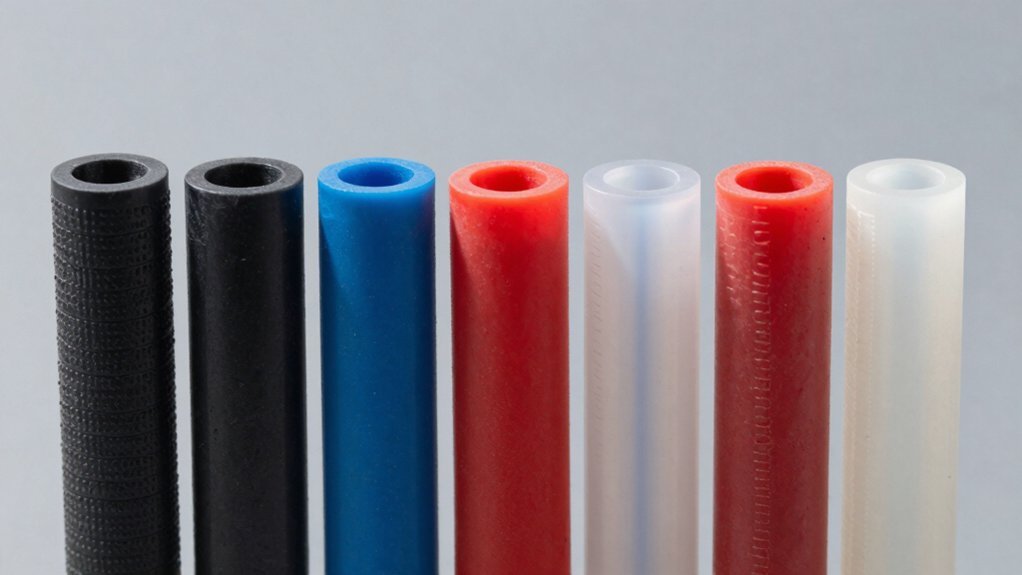
You’re managing sensitive electronics in an ESD-controlled environment, and you know that one wrong material choice can compromise your entire operation. Standard tubing won’t cut it—you need conductive options that dissipate static reliably while fitting your specific routing needs. The right tubing combines durability with precise electrical properties, but finding it requires understanding key specifications and performance factors.
| Conductive Rubber Tube Hose Silicone Tubing 6×1.5mm |  | Best Overall | Volume Resistivity: 5–15 Ω·cm | Surface Resistance: 80–400 Ω | Shore Hardness: 40A–70A | CHECK ON AMAZON | Read Our Analysis |
| Conductive Silicone Rubber Tubing 6×1.5mm No Static |  | Premium Performance | Volume Resistivity: 5–15 Ω·cm | Surface Resistance: 80–400 Ω | Shore Hardness: 40A–70A | CHECK ON AMAZON | Read Our Analysis |
| Conductive Silicone Rubber Tube (3FT/1 Meter) |  | Best For Length | Volume Resistivity: 5–15 Ohm·cm | Surface Resistance: 80–400 Ohms | Shore Hardness: 40A–70A | CHECK ON AMAZON | Read Our Analysis |
| Conductive Silicone Rubber Drain Hose Tube for Machines |  | Industrial Workhorse | Volume Resistivity: Not specified | Surface Resistance: Not specified | Shore Hardness: Not specified | CHECK ON AMAZON | Read Our Analysis |
| Conductive Rubber Tube Hose Silicone Tubing 6x4mm |  | Versatile Standard | Volume Resistivity: 5–15 Ohm·cm | Surface Resistance: 80–400 Ohms | Shore Hardness: 40A–70A | CHECK ON AMAZON | Read Our Analysis |
| Conductive Black Silicone Rubber Tube Anti-Static Hose |  | Budget-Friendly Pick | Volume Resistivity: 5–15 Ohm·cm | Surface Resistance: 80–400 Ohms | Shore Hardness: 40A–70A | CHECK ON AMAZON | Read Our Analysis |
| 4×1.5mm Conductive Black Silicone Rubber Tubing Set |  | Compact Solution | Volume Resistivity: 5–15 Ω·cm³ | Surface Resistance: 80–400 Ω | Shore Hardness: 40A–70A | CHECK ON AMAZON | Read Our Analysis |
More Details on Our Top Picks
Conductive Rubber Tube Hose Silicone Tubing 6×1.5mm
If you’re working in electronics manufacturing, automotive assembly, or healthcare environments where static electricity poses a risk to sensitive components, you’ll find this conductive silicone tubing indispensable. The 6×1.5mm tubing combines conductive silicone rubber with impressive electrical properties—volume resistivity of 5-15 Ω·cm and surface resistance of 80-400 Ω—making it ideal for ESD protection. Its Shore 40A-70A hardness delivers flexibility without compromising durability. You’ll appreciate its versatility across machinery and daily applications. This tubing effectively dissipates static charges while maintaining mechanical integrity, protecting your sensitive equipment from costly damage and ensuring reliable performance in controlled environments where precision matters.
- Volume Resistivity:5–15 Ω·cm
- Surface Resistance:80–400 Ω
- Shore Hardness:40A–70A
- Outer Diameter:6 mm
- Inner Diameter:1.5 mm
- Length:Not specified
- Additional Feature:Suitable for healthcare applications
- Additional Feature:Range of hardness options
- Additional Feature:Multiple industry compatibility
Conductive Silicone Rubber Tubing 6×1.5mm No Static
The Conductive Silicone Rubber Tubing 6×1.5mm No Static is engineered for professionals who work in electronics, healthcare, and automotive industries where static electricity poses a risk to sensitive components and equipment. You’ll appreciate its conductive silicone rubber construction, which effectively dissipates static charges while maintaining durability. With a Shore hardness rating of 40A–70A, it withstands demanding applications without compromising flexibility. The tubing’s volume resistivity of 5–15 Ω·cm and surface resistance of 80–400 Ω ensure reliable ESD protection. Its 6mm outer diameter and 1.5mm inner diameter make it ideal for precise fluid transfer and cable management. You can confidently deploy this tubing in sensitive environments requiring static control.
- Volume Resistivity:5–15 Ω·cm
- Surface Resistance:80–400 Ω
- Shore Hardness:40A–70A
- Outer Diameter:6 mm
- Inner Diameter:1.5 mm
- Length:Not specified
- Additional Feature:Durable, long-lasting construction
- Additional Feature:Organized specification grouping format
- Additional Feature:Prevents static electricity buildup
Conductive Silicone Rubber Tube (3FT/1 Meter)
For professionals working in electronics manufacturing and automotive assembly, our Conductive Silicone Rubber Tube delivers the static dissipation you need without compromising flexibility. This 1-meter tubing measures 8mm outer diameter by 4mm inner diameter, offering manageable dimensions for tight workspaces. With volume resistivity between 5–15 Ohm·cm and surface resistance of 80–400 Ohms, you’ll get reliable anti-static performance. The extruded, vulcanized construction guarantees durability and longevity in demanding environments. Its Shore hardness rating of 40A–70A provides the soft, flexible structure that’s easy to cut and install. You’ll appreciate how readily it integrates into existing ESD protocols while maintaining consistent conductivity throughout the tubing’s lifespan.
- Volume Resistivity:5–15 Ohm·cm
- Surface Resistance:80–400 Ohms
- Shore Hardness:40A–70A
- Outer Diameter:8 mm
- Inner Diameter:4 mm
- Length:1 meter (3.28 ft)
- Additional Feature:Pre-cut 1 meter length
- Additional Feature:Easy to cut further
- Additional Feature:Larger diameter tubing option
Conductive Silicone Rubber Drain Hose Tube for Machines
Industries requiring static-dissipative fluid management benefit substantially from conductive silicone rubber drain hose tubing that combines ESD protection with practical functionality. You’ll appreciate this 1-meter tube’s compact 6mm outer diameter and 1.5mm inner diameter, designed for low-pressure industrial and agricultural applications. Its conductive properties safely dissipate static electricity while you transport water, air, liquids, and gases without risk of electrostatic discharge. The highly flexible silicone rubber construction withstands demanding environments while remaining durable. You can easily customize the length using scissors, and four included double-entry toggles provide secure connections. This solution delivers reliable ESD control for machine drain systems where static sensitivity matters.
- Volume Resistivity:Not specified
- Surface Resistance:Not specified
- Shore Hardness:Not specified
- Outer Diameter:6 mm
- Inner Diameter:1.5 mm
- Length:1 meter
- Additional Feature:Includes four toggle accessories
- Additional Feature:Optimized for liquid transport
- Additional Feature:Low pressure industrial rated
Conductive Rubber Tube Hose Silicone Tubing 6x4mm
If you’re managing sensitive electronics in laboratories, manufacturing facilities, or medical environments, you’ll find that conductive rubber tubing with a 6x4mm profile offers the precise specifications you need for reliable ESD protection. This 1-meter tubing features a 0.27″ outer diameter and 0.16″ inner diameter, making it ideal for applications requiring controlled static dissipation. With volume resistivity between 5-15 Ohm·cm and surface resistance of 80-400 Ohms, it effectively prevents static electricity buildup. The silicone construction provides flexibility and durability, while its 40A-70A Shore hardness guarantees longevity under demanding conditions. You’ll appreciate the easy installation and cutting capabilities that streamline your setup across electronics, automotive, and healthcare applications.
- Volume Resistivity:5–15 Ohm·cm
- Surface Resistance:80–400 Ohms
- Shore Hardness:40A–70A
- Outer Diameter:6 mm (0.27″)
- Inner Diameter:4 mm (0.16″)
- Length:1 meter (3.28 ft)
- Additional Feature:Extruded and vulcanized construction
- Additional Feature:Healthcare compatible applications
- Additional Feature:Larger inner diameter design
Conductive Black Silicone Rubber Tube Anti-Static Hose
You’ll find the conductive black silicone rubber tube invaluable when you’re working in electronics manufacturing, healthcare facilities, or automotive environments where static electricity poses a genuine risk. This extruded, vulcanized tubing delivers excellent anti-static performance with volume resistivity between 5–15 Ohm·cm and surface resistance of 80–400 Ohms. The material’s exceptional flexibility makes cutting and installation straightforward, while its 40A–70A Shore hardness ensures durability across varied conditions. At 4 mm outer diameter and 1.5 mm inner diameter with 1-meter lengths, you’ll appreciate the versatility for precise applications. You’ll benefit from reliable ESD protection without compromising on ease of use or longevity in demanding industrial settings.
- Volume Resistivity:5–15 Ohm·cm
- Surface Resistance:80–400 Ohms
- Shore Hardness:40A–70A
- Outer Diameter:4 mm (0.16″)
- Inner Diameter:1.5 mm (0.06″)
- Length:1 meter (3.28 ft)
- Additional Feature:Pre-measured 1 meter length
- Additional Feature:Smaller diameter tubing option
- Additional Feature:Varied environment suitable
4×1.5mm Conductive Black Silicone Rubber Tubing Set
The 4×1.5mm conductive black silicone rubber tubing set is engineered for professionals who demand reliable electrostatic discharge (ESD) protection across diverse applications. You’ll appreciate its conductive silicone rubber construction, which delivers volume resistivity of 5–15 Ω·cm³ and surface resistance of 80–400 Ω. The tubing’s Shore hardness rating of 40A–70A guarantees durability without sacrificing flexibility. Its compact 4mm outer diameter and 1.5mm inner diameter make it ideal for precision work in electronics, automotive, and machinery environments. You can depend on this industrial hose set to protect sensitive equipment while maintaining consistent performance across healthcare, manufacturing, and daily-use applications.
- Volume Resistivity:5–15 Ω·cm³
- Surface Resistance:80–400 Ω
- Shore Hardness:40A–70A
- Outer Diameter:4 mm
- Inner Diameter:1.5 mm
- Length:Not specified
- Additional Feature:Supplied as complete set
- Additional Feature:Electrical industry focus
- Additional Feature:Daily necessities compatible
Factors to Consider When Choosing Conductive Rubber Tubing That Routes Air or Cable in ESD-Controlled Areas
When you’re selecting conductive rubber tubing for ESD-controlled environments, you’ll need to evaluate electrical conductivity requirements first to guarantee proper static dissipation for your specific application. You must also consider the inner and outer diameter specifications alongside material durability standards to guarantee the tubing withstands your operational demands while maintaining its protective properties. Finally, you’ll want to assess the flexibility and installation requirements of your tubing choice to guarantee it fits seamlessly into your existing infrastructure without compromising performance.
Electrical Conductivity Requirements
Because static electricity can damage sensitive components in controlled environments, you’ll need to understand the electrical properties that make conductive rubber tubing effective for ESD applications. Look for tubing with a volume resistivity between 5–15 Ω·cm, which allows controlled charge dissipation throughout the material. You should also verify the surface resistance falls within 80–400 Ω, enabling static charges to travel safely to ground along the tube’s exterior. This combination prevents excessive current flow while maintaining anti-static protection. Guarantee electrical properties remain consistent along the tubing’s entire length to guarantee uniform ESD protection. Additionally, consider your specific operating environment—humidity and temperature variations can affect resistance and discharge behavior, so verify specifications match your facility’s conditions.
Inner Diameter Specifications
Selecting the right inner diameter (ID) is critical to maintaining ESD protection while accommodating your specific routing needs. You’ll commonly encounter two standard options: 1.5 mm and 4.0 mm inner diameters. The 1.5 mm ID works well for thin cables or small wires, while the 4.0 mm ID (approximately 0.16 inches) suits larger conductors. When choosing your tubing, you must guarantee your cable or wire fits snugly without excessive clearance. Loose-fitting tubing compromises anti-static performance by allowing movement that disrupts consistent contact. Conversely, oversized tubing won’t accommodate your application effectively. Measure your specific cable diameter carefully before selecting tubing, guaranteeing proper fit that maintains both ESD protection and practical functionality in your controlled environment.
Outer Diameter Considerations
The outer diameter (OD) you choose directly impacts how your tubing integrates with fittings, connectors, and routing infrastructure in your ESD environment. Common options like 6 mm and 4 mm accommodate different airflow and cable bundle requirements, with 6 mm supporting higher capacity but sacrificing bendability in confined spaces. You’ll need to balance wall thickness against internal clearance to maintain rigidity while protecting enclosed cables or fluids. Remember that OD specifications may appear in millimeters or inches—verify exact conversions to prevent fitment problems. In ESD-controlled areas, select an OD that allows proper routing while minimizing abrasion risk and fitting securely within ducting or shielding enclosures.
Material Durability Standards
When you’re routing air or cable through ESD-controlled areas, your tubing’s durability directly affects how long it’ll perform without cracking, wearing, or losing its anti-static properties. Look for tubing with a Shore hardness range of 40A–70A, which balances rigidity and flexibility to withstand repetitive flexing and routing stress.
The extruded and vulcanized construction maintains structural integrity through environmental exposure typical in electronics and automotive settings. You’ll want to verify that the tubing sustains its anti-static performance with volume resistivity of 5–15 Ω·cm and surface resistance of 80–400 Ω, ensuring ESD control doesn’t degrade over time.
This elastomeric composition also enables easy cutting and reconfiguration, allowing your tubing to adapt to multiple applications without compromising durability or longevity.
Flexibility And Installation
How easily can you route conductive rubber tubing through tight spaces in your ESD-controlled environment? You’ll find conductive silicone rubber tubes exceptionally soft and flexible, with Shore hardness ratings between 40A–70A. This flexibility lets you bend and maneuver tubing around obstacles without difficulty, making installation straightforward even in cramped areas.
You can cut the tubing with scissors during installation, eliminating the need for specialized equipment. Standard sizes like 6×1.5 mm and 4×1.5 mm come in 1-meter lengths, simplifying on-site fitting and customization.
The extruded and vulcanized construction guarantees long-term reliability in your ESD environment. Just remember that their anti-static properties—volume resistivity of 5–15 Ω·cm and surface resistance of 80–400 Ω—maintain ESD control along your routed paths.
Temperature Range Compatibility
While flexibility and ease of installation matter for routing conductive tubing, you’ll also need to take into account how temperature variations affect your ESD system’s performance. Thermal exposure can alter material properties and compromise your tubing’s conductivity and anti-static capabilities.
You should verify the manufacturer’s datasheet for specific temperature ratings before selecting tubing. If temperature range information isn’t listed in product details, request it directly from your supplier. The hardness range—typically 40A–70A—influences how your tube responds to thermal expansion and contraction, though exact temperature limits require clarification.
To maintain both conductivity and anti-static performance, make sure your chosen tube’s temperature rating aligns with your environment’s conditions and any nearby heat sources. This compatibility check prevents degradation and ensures reliable ESD protection throughout your installation.
Chemical Resistance Properties
Chemical exposure presents a significant threat to your ESD system’s integrity, and selecting tubing with proven chemical resistance is just as critical as verifying temperature compatibility. You’ll need explicit chemical compatibility data from manufacturers for specific fluids like water, IPA, and acetone at your intended operating temperatures. Silicone elastomer bases resist water and aqueous solutions well, but organic solvent resistance varies considerably by formulation. Aggressive solvents such as chlorinated hydrocarbons can cause swelling or degradation, compromising mechanical integrity and electrical properties. Chemical vapors may alter surface resistivity over time with repeated exposure. Prioritize tubing with documented chemical resistance data and stable electrical properties post-exposure. Consider performing your own compatibility tests under actual operating conditions before full deployment.
Cost And Availability
Why does cost and availability matter when you’re sourcing conductive rubber tubing for your ESD-controlled environment? These factors directly impact your project timeline and budget.
You’ll find most suppliers stock standard 1-meter lengths and 3-foot segments, keeping lead times predictable. Common sizes like 6×1.5 mm and 4×1.5 mm are readily available, though 8×4 mm variants may require longer waits.
Pricing varies considerably based on diameter, length, and hardness rating (40A–70A). Since conductive silicone rubber’s volume resistivity ranges from 5–15 Ω·cm, premium options cost more but provide better ESD performance.
The broad market demand across electronics, healthcare, automotive, and other sectors means multiple suppliers compete, potentially lowering costs. However, exact pricing and lead times depend on your specific requirements and chosen supplier.
Frequently Asked Questions
What Is the Typical Cost Difference Between Conductive and Non-Conductive Rubber Tubing Options?
You’ll typically pay 20-40% more for conductive rubber tubing than non-conductive options. The price premium reflects enhanced material composition, specialized manufacturing processes, and superior static dissipation properties that standard tubing can’t match.
How Long Do Conductive Silicone Rubber Tubes Typically Last Before Replacement?
You’ll typically find conductive silicone rubber tubes lasting 5-10 years with proper maintenance. Their lifespan depends on your operating conditions, chemical exposure, temperature fluctuations, and how frequently you’re using them in your ESD-controlled environment.
Are Conductive Rubber Tubes Compatible With Existing Non-Esd Equipment Systems?
You’ll find that conductive rubber tubes aren’t compatible with most non-ESD equipment systems. They’re specifically designed for static-dissipative environments, so you’d need to verify your existing system’s grounding requirements before attempting integration.
What Certifications Should Conductive Tubing Have for Regulated Industries?
You’ll want your conductive tubing certified to ISO 8031, IEC 61340-5-1, and FDA standards depending on your industry. You should also verify UL listings and confirm compliance with your specific regulatory requirements.
Can Conductive Rubber Tubing Be Safely Used in High-Temperature Applications?
You’ll find that standard conductive rubber tubing won’t work safely at high temperatures. You’d need specially formulated compounds rated for heat resistance. You should verify the manufacturer’s temperature specifications before selecting tubing for your application.


Leave a Reply