
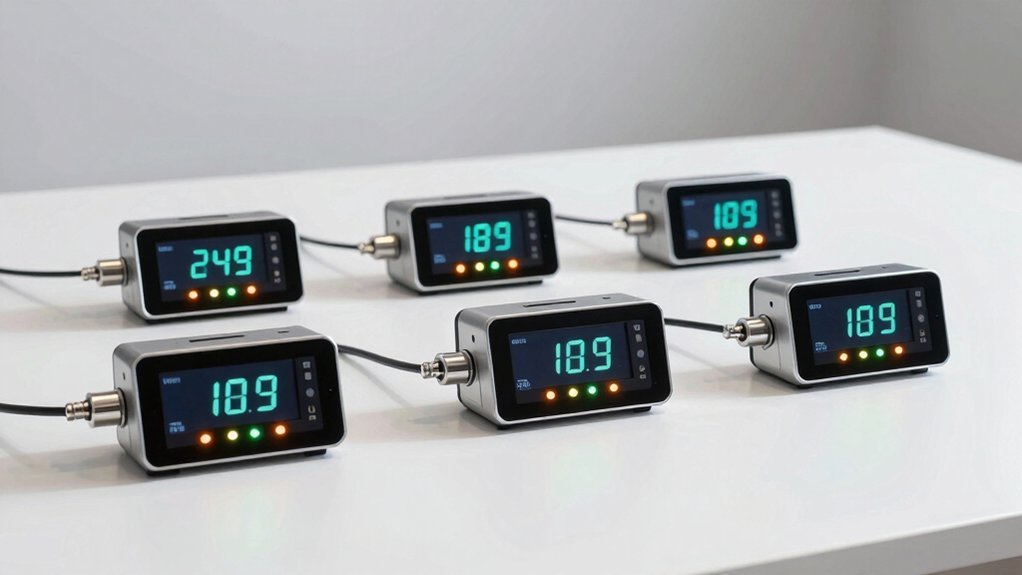
You’re managing static risks on your production line, but you’re not sure which ESD monitor will actually protect your equipment and personnel. The right tool makes all the difference—it catches problems before they become costly failures. We’ve identified five monitors that deliver real-time protection with minimal hassle. Let’s explore what sets them apart.
| FEITA 209-II Anti Static Wrist Strap with Monitor |  | Best for Continuous Monitoring | Measurement Type: Wrist strap ground path detection | Measurement Range: 1.068–2.0 mΩ (±5%) | Portability: Plug-and-play desktop monitor | CHECK ON AMAZON | Read Our Analysis |
| FMX-003 Electrostatic Fieldmeter ESD Voltage Tester |  | Best Non-Contact Tester | Measurement Type: Surface electrostatic voltage & ion balance | Measurement Range: 0–20 KV | Portability: Non-contact portable tester | CHECK ON AMAZON | Read Our Analysis |
| Digital Static Electricity Tester with Self Calibration |  | Best All-Purpose Tool | Measurement Type: Material resistivity & grounding assessment | Measurement Range: Not specified | Portability: Not specified | CHECK ON AMAZON | Read Our Analysis |
| FEITA Anti Static ESD Wrist Strap Tester | 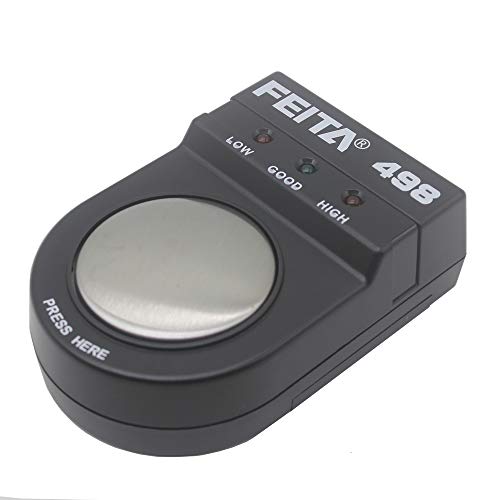 | Best Wrist Strap Verification | Measurement Type: Wrist strap grounding verification | Measurement Range: Not specified | Portability: Mobile inspection capability | CHECK ON AMAZON | Read Our Analysis |
| FMX-004 Electrostatic Field Meter ESD Tester | 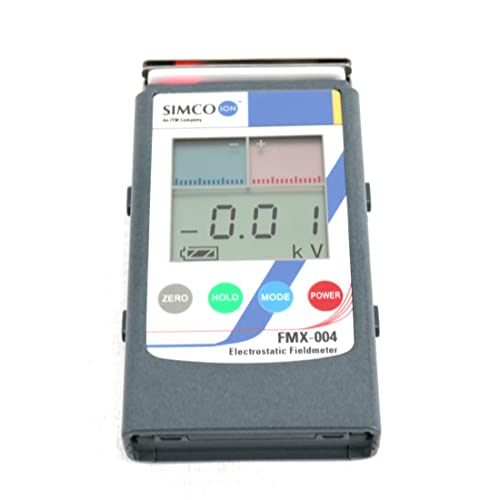 | Most Portable Option | Measurement Type: Electrostatic field strength & polarity | Measurement Range: 0–30 KV | Portability: Pocket-sized, compact, portable | CHECK ON AMAZON | Read Our Analysis |
More Details on Our Top Picks
FEITA 209-II Anti Static Wrist Strap with Monitor
If you’re working in electronics manufacturing or assembly environments where static discharge poses a constant threat, the FEITA 209-II offers real-time monitoring that keeps you protected. This dual ESD wrist strap tester continuously supervises your grounding path contact between wristband and workbench. You’ll receive instant alerts if the discharge path fails for even 0.1 seconds, ensuring you’re never caught unprotected. The microcomputer-controlled system lets you adjust test parameters and alarm sensitivity freely, accommodating most electrostatic wristbands on the market. With standard safety certification and strong anti-interference performance, you’ll get dependable protection across varied work environments without compatibility concerns.
- Measurement Type:Wrist strap ground path detection
- Measurement Range:1.068–2.0 mΩ (±5%)
- Portability:Plug-and-play desktop monitor
- Working Distance:Direct contact
- Display & Alerts:Real-time alarm alerts
- Industry Standards Compliance:ESD safety standards
- Additional Feature:Dual wrist strap monitoring capability
- Additional Feature:Configurable test parameters (1.068–2.0 mΩ)
- Additional Feature:0.1-second alarm trigger sensitivity
FMX-003 Electrostatic Fieldmeter ESD Voltage Tester
The FMX-003 Electrostatic Fieldmeter is your ideal choice when you need non-contact electrostatic measurements without disrupting sensitive surfaces. This portable tester measures surface electrostatic values up to 20KV from a working distance of just 25mm. You’ll appreciate its anti-static shell construction and grounding buckle, which guarantee measurement reliability. The LCD display uses intuitive color coding—red for positive charges, blue for negative—refreshing at 5Hz. You can also assess ion balance in ESD eliminating equipment, measuring readings from 0 to ±200V. Beyond-range indicators and automatic shutdown protect your workflow, while the device’s compact design makes field testing convenient and straightforward.
- Measurement Type:Surface electrostatic voltage & ion balance
- Measurement Range:0–20 KV
- Portability:Non-contact portable tester
- Working Distance:1 inch (25 mm)
- Display & Alerts:LCD with color indication (red/blue) & refresh rate
- Industry Standards Compliance:Not specified
- Additional Feature:Ion balance measurement (±200V)
- Additional Feature:Color-coded LCD display output
- Additional Feature:5 Hz real-time refresh rate
Digital Static Electricity Tester with Self Calibration
Manufacturing facilities and quality control teams seeking reliable resistivity measurements will find a Digital Static Electricity Tester with Self Calibration invaluable for evaluating conductive, antistatic, and static-dissipative materials. You’ll appreciate its one-key operation and high reliability, which streamline testing across incoming inspection, maintenance, and training applications. The device’s self-calibration and self-span features eliminate manual adjustments, saving you time. Its high-speed op-amp technology provides accurate readings, while ASTM D257 parallel grid induction calibration meets ANSI ESD S20.20 and IEC61340-5-1 standards, keeping your operations compliant with industry requirements.
- Measurement Type:Material resistivity & grounding assessment
- Measurement Range:Not specified
- Portability:Not specified
- Working Distance:Not applicable
- Display & Alerts:LCD display
- Industry Standards Compliance:ANSI ESD S20.20, IEC61340-5-1, JESD625B, CECC, ASTM, UL
- Additional Feature:Automatic self-calibration capability
- Additional Feature:High-speed operational amplifier technology
- Additional Feature:ASTM D257 parallel grid method
FEITA Anti Static ESD Wrist Strap Tester
Electronics repair technicians’ll find the FEITA 498 Anti Static ESD Wrist Strap Tester invaluable for maintaining workplace safety and protecting sensitive components. This device measures grounding effectiveness across all ESD-compliant wired wrist straps via banana jack connections, ensuring your equipment stays properly grounded. You’ll appreciate its ability to quickly inspect various grounding systems from any location without relocating equipment. The tester’s tight contacts deliver low resistance and strong connectivity, offering long life and excellent oxidation resistance. By monitoring your wrist strap grounding, you’ll eliminate static-related product damage and enhance employee safety during electronics repair work.
- Measurement Type:Wrist strap grounding verification
- Measurement Range:Not specified
- Portability:Mobile inspection capability
- Working Distance:Direct contact
- Display & Alerts:Visual detection
- Industry Standards Compliance:ESD-compliant systems
- Additional Feature:Universal banana jack compatibility
- Additional Feature:Low contact resistance maintenance
- Additional Feature:Multiple location quick inspection
FMX-004 Electrostatic Field Meter ESD Tester
Who needs precise electrostatic field measurements in confined spaces? You’ll want the FMX-004 Electrostatic Field Meter. This pocket-sized tester measures static electricity levels from 0–30 KV with an alternate range of 0 to ±1.49 KV. Its 1-inch working distance lets you assess field strength accurately in tight spots where standard equipment won’t fit. The LCD display shows readings clearly, while integrated LEDs indicate proper measuring distance. You’ll appreciate the sound alarm for alerts and the ability to store measurements and detect polarity. The conductive plastic housing with earth connection guarantees accuracy, making this portable device ideal for awkward locations where you need reliable ESD data.
- Measurement Type:Electrostatic field strength & polarity
- Measurement Range:0–30 KV
- Portability:Pocket-sized, compact, portable
- Working Distance:1 inch
- Display & Alerts:LCD digital display with LED indicators & sound alarm
- Industry Standards Compliance:Not specified
- Additional Feature:Field strength data storage
- Additional Feature:Integrated dual LED positioning
- Additional Feature:Sound alarm notification feature
Factors to Consider When Choosing an ESD Monitor That Lets You Measure Static Levels in Real Time
When you’re selecting an ESD monitor for real-time static measurement, you’ll want to evaluate its measurement range and accuracy to guarantee it captures the specific voltage levels in your environment. You should also consider the monitor’s real-time capabilities, display system, and alert functions so you can quickly identify and respond to electrostatic hazards. Finally, you’ll need to assess portability, ease of use, and compatibility with your existing equipment types to integrate the monitor seamlessly into your ESD control program.
Measurement Range And Accuracy
Selecting the right measurement range and accuracy specifications is critical to ensuring your ESD monitor captures true static levels in real time. You’ll want a wrist strap monitor with an adjustable test range around 1.068–2.0 MΩ (±5%) for reliable pass/fail decisions on ground path resistance. For high-voltage field measurements, choose a device covering up to 20 kV at a 1 inch working distance with clear polarity indication. Some advanced meters extend to 30 kV and display both positive and negative readings, verifying accuracy across sign changes. Self-calibration capability enhances consistency by compensating for drift, maintaining reliable readings throughout repeated uses and ensuring your ESD protection remains trustworthy.
Real-Time Monitoring Capabilities
Because static discharge events can occur in milliseconds, you’ll need an ESD monitor that provides continuous supervision of your wrist strap-to-workbench grounding path with instant fault detection. The best monitors use microcontroller-based control to verify ground path contact continuously and trigger alerts when faults persist.
Look for systems that alarm within 0.1 seconds of disconnection, making sure you’re immediately aware of problems during operation. Plug-and-play setup with user prompts lets you respond quickly to abnormalities without disrupting your workflow.
You’ll also want configurable test and alarm parameters that adapt to different wristbands and environments. Adjustable alarm sensitivity makes sure the monitor works effectively in your specific workspace while minimizing false alerts that could reduce productivity.
Display And Alert Systems
How can you quickly assess static levels and grounding status during your work? Display and alert systems are essential for immediate feedback. Look for monitors with LCD readouts featuring color-coded charge indicators—red for positive, blue for negative—so you’ll instantly recognize surface polarity. Audible alarms alert you when grounding or path continuity fails, preventing unnoticed drift. Many units automatically detect out-of-range conditions and trigger warning signals or shutdown features, safeguarding your sensitive components. Choose monitors designed for quick interpretation across various work environments. Constant online monitoring provides continuous real-time awareness without requiring manual checks. These intelligent alert systems guarantee you’re never caught off-guard by static hazards, making them invaluable for maintaining ESD compliance throughout your operations.
Portability And Ease Of Use
Your ESD monitor’s practical design directly impacts how effectively you’ll use it in real-world conditions. Pocket-sized and compact handheld models let you carry your monitor anywhere, enabling quick setup without disrupting your workflow. Fixed working distances around 25 mm eliminate contact testing, allowing you to measure safely from a distance. One-key start and auto shutdown features streamline operation, reducing prep time. LCD displays with simple red or blue LED indicators give you instant feedback on field status and polarity. Self-calibration capabilities and durable, anti-static housings guarantee reliability in tight or awkward spaces. Onboard data storage lets you track measurements efficiently. These user-friendly features combine to make your ESD monitoring practical and accessible across diverse work environments.
Compatibility With Equipment Types
Compatibility between your ESD monitor and existing equipment determines whether you’ll achieve seamless real-time monitoring across your workspace. You’ll want a device that supports most electrostatic wristbands available, ensuring you won’t need replacements or adapters for your current setup.
Look for monitors featuring standard banana jack connections for wired wrist straps, providing reliable grounding checks across different configurations. The best models accommodate varied strap types without requiring modifications to your existing equipment.
Choose devices offering constant ground continuity monitoring with alarm signaling when the wrist strap path fails. This real-time alert system keeps you immediately aware of grounding issues during work.
Additionally, prioritize plug-and-play units with configurable test parameters. This flexibility lets you align the monitor with your specific equipment grounding schemes and bench layouts without complicated setup procedures.
Calibration And Standards Compliance
When you’re selecting an ESD monitor, making sure it complies with recognized standards—including ANSI ESD S20.20, IEC61340-5-1, JESD625B, CECC, ASTM, and UL procedures—directly impacts your ability to measure static levels reliably.
You’ll want devices featuring self-calibration and self-span calibration capabilities, which maintain measurement accuracy over time without requiring external references. Confirm the monitor uses established calibration methods like ASTM D257 parallel grid induction for resistivity measurements, providing traceable, repeatable results.
Standard-compliant monitors should provide documented testing procedures and clear failure indicators when the device falls out of calibration or exceeds measurable ranges. You must verify regular recalibration intervals are specified to maintain conformance with relevant standards. This guarantees your ESD monitoring remains accurate and compliant throughout its operational lifespan.
Safety Features And Reliability
How do you guarantee that your ESD monitoring system catches failures before they cause damage? Real-time monitors with microcomputer control continuously supervise your wrist strap’s ground path, triggering immediate alarms when disconnections occur for 0.1 seconds or longer. You’ll receive prompt alerts and ground-status notifications, enabling rapid response to abnormal conditions.
Certified power supplies enhance safety by maintaining constant supervision, preventing unnoticed grounding failures that could compromise component protection. Plug-and-play designs simplify setup while preserving ongoing monitoring capabilities without sacrificing functionality.
Robust reliability comes from wide compatibility with various wristbands and strong anti-interference performance. These features work together to maintain accurate ground monitoring across diverse ESD environments, substantially reducing static-related damage risks during handling operations.
Frequently Asked Questions
How Often Should ESD Monitors Be Calibrated for Accurate Static Level Measurements?
You should calibrate your ESD monitors every six months to one year for best accuracy. You’ll want to follow your manufacturer’s specific guidelines, as you might need more frequent calibration if you’re operating in high-risk environments.
What Is the Typical Lifespan of an ESD Wrist Strap Before Replacement?
You’ll typically replace your ESD wrist strap every 6-12 months, depending on usage frequency and wear. You should inspect it regularly for visible damage, fraying, or resistance changes that’d compromise your static protection effectiveness.
Can ESD Monitors Detect Static Levels in Humid Versus Dry Environments?
You’ll find that ESD monitors can detect static levels in both humid and dry environments, though they’re more sensitive in dry conditions where static buildup occurs faster and reaches higher voltage levels.
Are Professional ESD Monitors More Accurate Than Consumer-Grade Testers?
You’ll find professional ESD monitors deliver superior accuracy through advanced calibration, broader measurement ranges, and certified components. Consumer-grade testers offer basic functionality but lack precision needed for critical electrostatic protection in sensitive environments.
What Safety Standards Should ESD Monitors Comply With for Workplace Use?
You’ll want your ESD monitors complying with IEC 61340-4-3 and ANSI/ESD S20.20 standards. You should guarantee they’re calibrated annually and meet ISO 9001 requirements for workplace safety and static control protocols.



Leave a Reply