
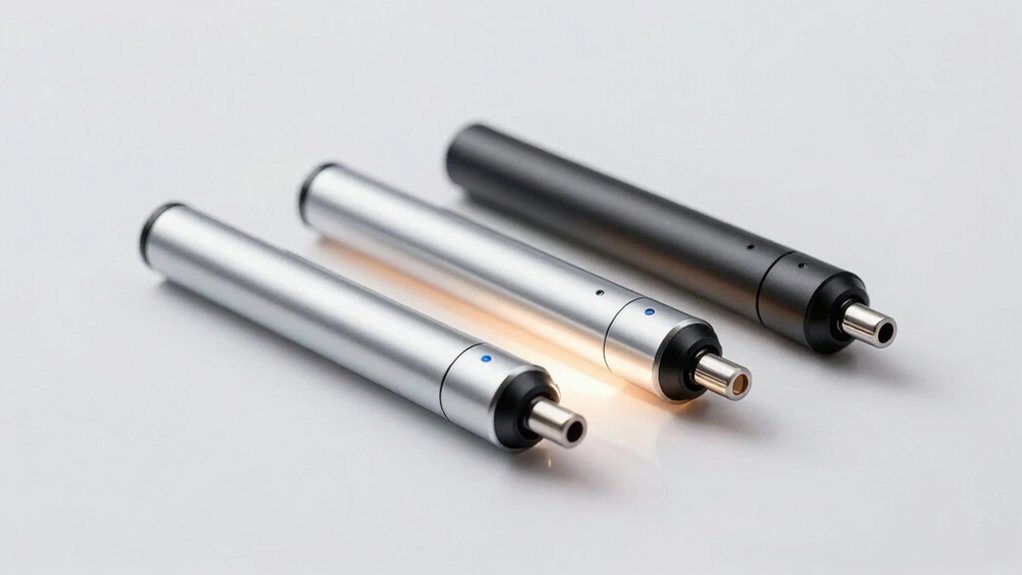
You’re facing a critical choice if you’re selecting an ionizing cartridge system for 2026. Whether you’re upgrading HVAC infrastructure or retrofitting existing setups, you’ll need to understand what separates the top performers from standard options. The TFB-YA178, TFB-YD1278, and retrofit platforms each offer distinct advantages—but which one truly fits your needs?
| Bipolar Ionization Air Purifier Module for HVAC |  | Professional Grade | Ion Output Capacity: >12 million positive ions/cc; >13 million negative ions/cc at 15 cm | Input Voltage: 110V/120VAC | High-Voltage Output: ±3.0 kV | CHECK ON AMAZON | Read Our Analysis |
| Bipolar Ionization Air Purifier Module for HVAC |  | Best Overall | Ion Output Capacity: >4 million positive ions/cm³; >8 million negative ions/cm³ at 15 cm | Input Voltage: DC 12V | High-Voltage Output: ±3.0 kV | CHECK ON AMAZON | Read Our Analysis |
| 12VDC Negative Ion Generator Plasma Ionizer Module |  | Budget-Friendly Pick | Ion Output Capacity: Not specified | Input Voltage: 12VDC | High-Voltage Output: 15kV DC | CHECK ON AMAZON | Read Our Analysis |
More Details on Our Top Picks
Bipolar Ionization Air Purifier Module for HVAC
If you’re managing laboratories, clean rooms, or residential HVAC systems where static control matters, the Bipolar Ionization Air Purifier Module for HVAC (Model TFB-YA178) is your solution. This 110V/120VAC replacement module generates over 12 million positive ions and 13 million negative ions per cubic centimeter at 15 cm, delivering balanced bipolar ionization for best air purification. Operating at ±3.0KV with minimal current draw under 2 mA, it integrates seamlessly into existing air purifiers and air conditioning systems. The module’s 10 MΩ insulation resistance guarantees reliability and safety. Fully tested and manufactured with high-quality materials, it meets rigorous technical requirements for static elimination in demanding environments.
- Ion Output Capacity:>12 million positive ions/cc; >13 million negative ions/cc at 15 cm
- Input Voltage:110V/120VAC
- High-Voltage Output:±3.0 kV
- Operating Temperature Range:Not specified
- Primary Applications:Laboratories, clean rooms, homes, HVAC systems
- Insulation Resistance:10 MΩ
- Additional Feature:Ultra-high positive ion output
- Additional Feature:AC powered (110V/120VAC)
- Additional Feature:Minimal working current (<2mA)
Bipolar Ionization Air Purifier Module for HVAC
You’ll find the Bipolar Ionization Air Purifier Module (Model TFB-YD1278) ideal if you’re looking to integrate static elimination and air purification into HVAC systems, laboratories, or clean rooms. This DC 12V module generates over 4 million positive ions and 8 million negative ions per cubic centimeter, effectively neutralizing dust, pollen, and airborne contaminants. Operating at ±3.0 kV with minimal power consumption under 20 mA, it maintains safe ozone emissions below 0.05 ppm. The module’s compact design suits air purifiers, air conditioners, and VAV systems, making it a versatile replacement part for ionization devices across diverse environments.
- Ion Output Capacity:>4 million positive ions/cm³; >8 million negative ions/cm³ at 15 cm
- Input Voltage:DC 12V
- High-Voltage Output:±3.0 kV
- Operating Temperature Range:-10°C to +45°C
- Primary Applications:HVAC systems, laboratories, clean rooms, homes
- Insulation Resistance:10 MΩ
- Additional Feature:Low ozone emission (<0.05ppm)
- Additional Feature:DC powered (12V input)
- Additional Feature:Wide temperature operating range
12VDC Negative Ion Generator Plasma Ionizer Module
Model makers and hobbyists who need an affordable yet powerful solution for static grass application and scenery work will find this 12VDC negative ion generator invaluable. This compact plasma ionizer delivers 15kV DC output, enabling you to create vertical-standing artificial grass flock with exceptional detail. You’ll easily integrate it into DIY static grass applicators for miniature trees and architectural models. Weighing just 3.84 ounces and measuring 2.4 x 1.6 x 1.2 inches, it’s portable enough for any workspace. Beyond modeling, you can incorporate it into air filtration systems or small-scale HVAC applications. You get professional-grade performance without compromising your budget.
- Ion Output Capacity:Not specified
- Input Voltage:12VDC
- High-Voltage Output:15kV DC
- Operating Temperature Range:Not specified
- Primary Applications:Static grass modeling, hobby applications, air purification systems
- Insulation Resistance:Not specified
- Additional Feature:High voltage output (15kV)
- Additional Feature:Compact dimensions (2.4×1.6×1.2″)
- Additional Feature:DIY hobbyist-friendly design
Factors to Consider When Choosing an Ionizing Cartridge System That Provides Quiet Continuous Static Elimination
When selecting an ionizing cartridge system for quiet static elimination, you’ll want to evaluate voltage output and ion generation capacity to guarantee adequate performance for your specific application. You should examine noise reduction technology features alongside power consumption metrics, as these factors directly impact operational efficiency and workplace comfort. Finally, you’ll need to verify that the system’s operating temperature range aligns with your facility’s environmental conditions to maintain consistent performance.
Voltage Output And Performance
Several critical performance metrics determine whether an ionizing cartridge system effectively eliminates static without generating excessive noise or consuming unnecessary power. You’ll want to examine the bipolar HV output, which typically ranges from ±3.0 kV with a tolerance of ±0.5 kV. The ionization performance varies substantially—some systems deliver over 12 million positive ions/cc and 13 million negative ions/cc at 15 cm, while others produce 4 million positive and 8 million negative ions/cc at the same distance. Output current remains deliberately low, typically under 2 mA for higher-output designs. You should prioritize systems maintaining insulation resistance around 10 MΩ to guarantee stable, safe operation. These specifications directly impact your system’s effectiveness and operational efficiency.
Ion Generation Capacity Levels
You’ll find that ion generation capacity—measured as ions per cubic centimeter at 15 cm from the source—serves as the primary indicator of an ionizing cartridge system’s effectiveness. High-capacity modules exceed tens of millions of ions per cubic centimeter, though positive and negative ion counts often differ asymmetrically. You should recognize that voltage and current draw directly influence total ion yield and potential ozone production. When selecting a system, consider whether asymmetric output matters for your application. Verify that your chosen cartridge maintains appropriate voltage levels near ±3 kV with solid insulation resistance for safe, continuous operation. These specifications guarantee reliable static elimination within your environmental operating range while minimizing maintenance concerns and maximizing performance longevity.
Noise Reduction Technology Features
While ion generation capacity determines how effectively a cartridge system eliminates static, the operational noise it produces can substantially impact your work environment.
You’ll want to prioritize systems featuring solid-state, no-moving-parts high-voltage drivers that eliminate mechanical noise from ionizing operations. Look for cartridges drawing very low operating currents—typically under 2 mA or 20 mA—which minimize both electrical noise and heat-related hum.
Direct DC input with high insulation resistance around 10 MΩ guarantees stable, noise-free electrical performance. Compact, shielded module designs reduce enclosure vibration and electromagnetic noise coupling, further enhancing quieter operation.
Finally, assess ozone emission levels; stable discharge behavior producing less than 0.05 ppm reflects consistent ion generation and contributes to steadier, quieter static elimination throughout your workspace.
Power Consumption And Efficiency
One critical factor that often gets overlooked is how efficiently an ionizing cartridge system converts electrical input into static elimination without wasting energy as heat or noise. You’ll find that low power draw doesn’t compromise performance. Product1 draws less than 2 mA at 110V (roughly 0.22 W) while delivering ±3 kV output, and product2 uses under 20 mA at 12V (approximately 0.24 W). Both maintain quiet operation because minimal electrical draw generates negligible heat. If you’re planning energy-conscious installations, 12V DC modules with sub-20 mA current offer compact, efficient solutions for HVAC systems. High insulation resistance (10 MΩ) further reduces leakage losses, ensuring stable, efficient performance that keeps your operational costs low.
Operating Temperature Range Compatibility
Beyond optimizing power consumption, you must verify that your chosen ionizing cartridge system can operate reliably within your facility’s ambient temperature conditions. Most modules specify defined operating ranges—for example, -10°C to +45°C—that determine suitability for your environment. Narrow temperature windows may restrict use in extreme outdoor or unheated spaces where conditions fall outside acceptable bands.
Selecting a system compatible with your ambient temperatures maintains stable ion production and consistent static elimination performance. If your facility experiences temperature fluctuations beyond a module’s specified range, you’ll compromise effectiveness and risk equipment failure.
Evaluate your installation location carefully. Choose a unit with broader temperature specifications or different ratings if you’ll operate in variable conditions. This guarantees your ionizing system delivers reliable performance year-round, regardless of seasonal or environmental temperature changes.
Application Versatility And Flexibility
How do you guarantee your ionizing cartridge system performs effectively across different environments and equipment configurations? You’ll want a flexible module that delivers bipolar ionization with both positive and negative ion outputs—typically tens of millions of ions per cubic centimeter—guaranteeing reliable particle neutralization wherever you deploy it.
Look for compatibility with multiple power inputs: DC 12V or AC 110–120V options let you integrate the cartridge into standalone units, existing HVAC systems, or purifier devices without major modifications. Low working current requirements (under 20 mA or 2 mA depending on your model) minimize power demands while maintaining effectiveness.
The compact, lightweight form factor—often just a few square inches and under several ounces—enables seamless retrofitting into tight spaces and ductwork. This versatility guarantees you’re covered across laboratories, clean rooms, homes, and industrial settings.
Ozone Emission Safety Standards
Safety should be your primary concern when selecting an ionizing cartridge system, and ozone emission stands at the forefront of that decision. You’ll want to verify that your chosen system meets strict safety standards, typically limiting ozone output to less than 0.05 ppm. Check manufacturer specifications and accompanying certifications to confirm compliance with regulatory thresholds, especially if you’re deploying the system in occupied spaces or HVAC environments.
Don’t overlook the importance of testing documentation. Reputable manufacturers conduct operating condition assessments to guarantee safe ozone levels throughout the device’s lifetime. You should also establish periodic monitoring practices to validate continued compliance over time. This proactive approach guarantees your ionizing cartridge system maintains safe air quality standards while effectively eliminating static, protecting both your equipment and the people working nearby.
Insulation Resistance And Durability
When you’re selecting an ionizing cartridge system for quiet, continuous static elimination, insulation resistance and durability deserve your careful attention. You’ll want modules with 10 MΩ insulation resistance, which minimizes leakage and enhances safety during sustained high-voltage operation. This specification prevents voltage drift and insulation degradation over extended use.
You’ll also benefit from systems featuring broad operating temperature ranges (-10°C to +45°C), maintaining insulation integrity across diverse environments. Low working currents—≤2 mA or ≤20 mA depending on your module—reduce thermal stress on insulation while enabling quiet operation.
Finally, you should prioritize cartridges manufactured from high-quality materials with extensive testing protocols. This guarantees your system delivers reliable ion production without compromising insulation performance throughout its operational lifetime.
Frequently Asked Questions
How Long Do Ionizing Cartridge Filters Typically Last Before Replacement?
You’ll typically replace ionizing cartridge filters every 6 to 12 months, depending on usage frequency and environmental conditions. However, you should monitor performance regularly since heavy use requires more frequent replacements to maintain best static elimination effectiveness.
What Is the Average Cost of Ionizing Cartridge Systems Compared to Traditional Air Purifiers?
You’ll find ionizing cartridge systems cost 20-40% more than traditional air purifiers initially, but they’re offering superior static elimination and longer filter life, making them more cost-effective long-term investments for your workspace.
Are Ionizing Cartridges Safe for Homes With Pets or Children?
You’ll find that ionizing cartridges are generally safe for homes with pets and children when you follow manufacturer guidelines. They’re designed with safety features, though you should guarantee proper ventilation and keep units away from direct contact.
Can Ionizing Cartridge Systems Reduce Airborne Viruses and Bacteria Effectively?
You’ll find that ionizing cartridge systems can reduce some airborne particles, but they’re not designed primarily for virus and bacteria elimination. They’re most effective for static control, not pathogen removal.
Do Ionizing Cartridges Require Professional Installation or Can Users Install Them Independently?
You can install most ionizing cartridges independently since they’re designed for user-friendly setup. However, you’ll want to check your specific model’s instructions, as some systems require professional installation to guarantee proper calibration and warranty coverage.



Leave a Reply