

You can effectively control static electricity through these seven humidity-focused methods: Install a whole-home humidifier to maintain levels above 40%, use portable humidifiers in problem areas, add moisture-loving indoor plants, run a hot shower with the door open, place water bowls near heat sources, air-dry your laundry indoors, and invest in an ultrasonic humidifier for targeted control. These solutions work because water molecules in the air naturally conduct and disperse static charges before they build up. While these methods are effective individually, combining multiple approaches will give you the most thorough static protection.
Understanding Humidity and Static Basics
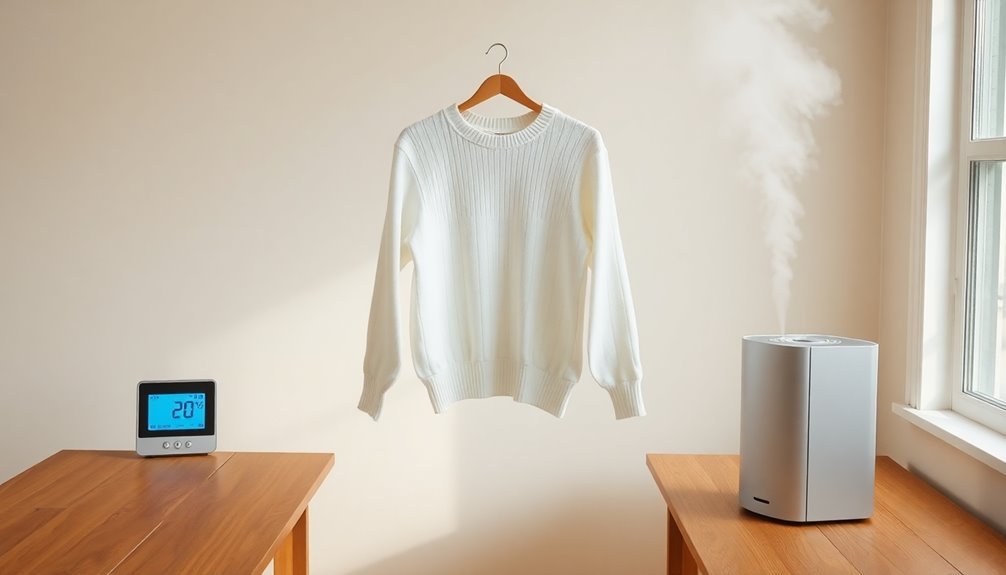
In today's increasingly electronic world, understanding the relationship between humidity and static electricity has become crucial. You'll find that static electricity occurs when electrons transfer between surfaces, creating an imbalance of charges.
This process can lead to unwanted electrostatic discharges that may damage your sensitive electronic equipment.
The key to controlling static lies in understanding how humidity affects it. When relative humidity drops below 40%, you'll notice increased static buildup in your environment. However, if you maintain humidity levels above 55%, you'll effectively eliminate most static electricity concerns. Evaporative humidifiers can help maintain these optimal humidity levels consistently.
This happens because moisture in the air acts as a natural conductor, helping to earth potential static charges before they can accumulate.
You'll experience more static electricity problems during winter months when cold air holds less moisture. The dry air creates perfect conditions for static buildup due to the lack of water molecules to conduct electrical charges.
That's why you'll need to pay special attention to humidity control during these periods. By understanding these basics, you can better protect your equipment and create a more comfortable environment through proper humidity management.
Effective Humidification Equipment Selection
Equipment selection proves essential when implementing an effective static control strategy through humidification. You'll need to choose between two main categories: adiabatic and isothermal humidifiers, each offering distinct advantages for static control.
Adiabatic options include atomizing systems that create fine water sprays and ultrasonic units that use sound waves to generate moisture. You'll find these systems particularly energy-efficient, with the added benefit of reducing cooling loads. Maintaining relative humidity between 40-60% helps prevent static electricity build-up effectively.
If you're dealing with sensitive materials, think about dry fog systems that won't wet your products.
For isothermal solutions, you can select from various steam-based options. You'll get precise humidity control with centrally supplied steam systems or electric steam generators. If you're concerned about water quality, steam-to-steam humidifiers provide clean moisture without contaminants.
When selecting your equipment, you'll want to ponder several key factors. Focus on energy efficiency to keep operational costs down, and guarantee your system allows for precise humidity control.
Don't forget to factor in maintenance requirements and health considerations.
If you have specific problem areas, you can implement localized solutions using nozzles or targeted spray systems near heat-generating equipment or in dry air pockets.
Monitoring System Implementation
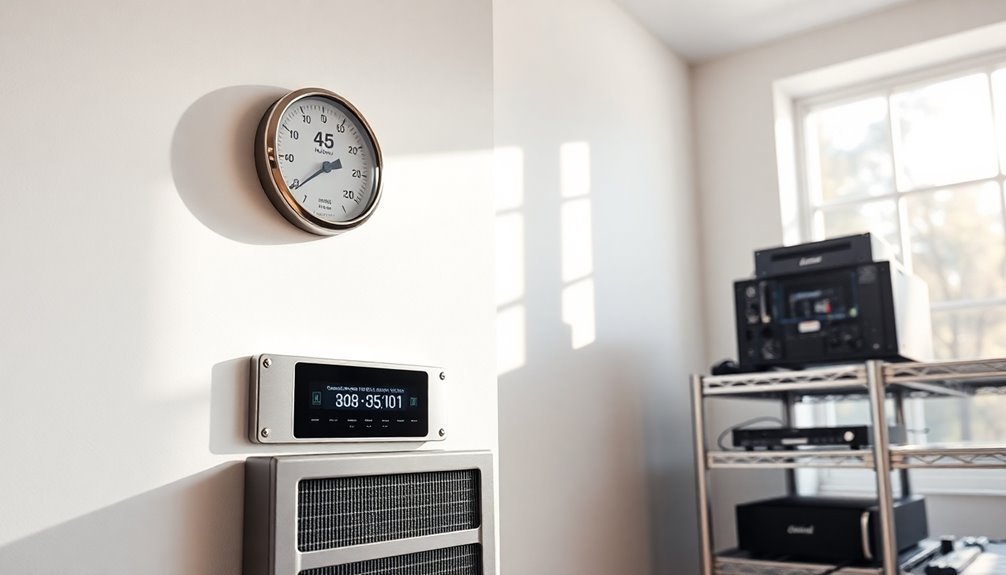
Success in controlling static through humidity depends heavily on implementing a robust monitoring system. You'll need to start with a thorough facility assessment to identify critical areas requiring monitoring and determine your specific needs.
Once you've mapped out these requirements, select appropriate hardware components, including sensors and monitors that integrate seamlessly with your existing HVAC systems. Installing sensors at different vertical heights throughout your facility will provide comprehensive coverage of humidity variations.
Your monitoring system should include real-time data tracking capabilities and automated alerts that notify you when humidity levels fall outside acceptable ranges. You'll want to guarantee your system features an intuitive user interface that allows operators to quickly interpret data and make necessary adjustments.
Don't forget to implement secure data storage solutions for historical analysis and trend identification.
To maintain system effectiveness, you'll need to establish regular calibration schedules and maintenance protocols. Train your staff thoroughly on system operation and provide ongoing support to guarantee proper usage.
Industrial Static Control Methods
Modern industrial facilities deploy a range of static control methods, with humidity management serving as a cornerstone strategy. Maintaining humidity levels above 55% effectively eliminates static buildup, while letting it drop below 45% can trigger problematic static charges.
In manufacturing environments, you'll need to pay special attention to areas around heat-generating machines, where localized dry air pockets can create static-prone zones. Using inert gases can provide additional protection against spark risks in these areas.
To combat static effectively, you can implement various humidification techniques. Atomizing nozzles installed in ceiling spaces provide broad coverage, while targeted spray systems address specific problem areas. For precise control, systems like MicroCool FOCUS offer pulsed humidity delivery that you can fine-tune to your needs.
- You're risking costly equipment damage and product defects every minute your facility operates with inadequate humidity control
- Your operators' safety and productivity are directly impacted by uncontrolled static discharge
- You're leaving money on the table through reduced production quality and efficiency when static isn't properly managed
This approach proves particularly valuable in printing, electronics, automotive, and pharmaceutical industries, where static-related issues can substantially impact product quality and operational efficiency. You'll find these solutions can be customized to meet your specific industrial requirements while maintaining consistent humidity levels throughout your facility.
Home Static Prevention Solutions

During the dry winter months, managing static electricity at home requires a multi-faceted approach that's simpler than industrial solutions. A whole-home humidifier can provide comprehensive coverage when integrated with your HVAC system.
Your choice of fabrics plays a vital role in static prevention. Opt for natural materials like cotton and wool instead of synthetics, and use dryer sheets when laundering your clothes.
If you're dealing with stubborn static, try air-drying your clothes or removing them while slightly damp. Adding baking soda to your wash cycle can also help reduce static cling.
You can create a more humid environment naturally by incorporating indoor plants, especially moisture-loving varieties like peace lilies and ferns. Place bowls of water near heat sources to increase local humidity levels.
For immediate relief, keep a metal object handy to discharge static before touching sensitive surfaces, and apply moisturizer to your skin regularly.
Don't forget to treat your carpets and upholstery with anti-static sprays for thorough static control throughout your home.
Frequently Asked Questions
Does Static Electricity Affect the Quality of Printed Photographs?
Yes, you'll notice static electricity can severely impact your photo quality. It'll cause ink to scatter and deviate, creating blurred prints, unwanted spots, and color inconsistencies, especially in lighter tones and flesh colors.
Can Static Build-Up Damage Internal Computer Components During Maintenance?
Yes, you should be very careful as static electricity can severely damage your computer's internal components. Even voltages as low as 10 volts can harm microchips, while you naturally generate thousands when moving around.
How Does Seasonal Temperature Variation Impact Optimal Humidity Settings?
You'll need lower humidity (30-40%) in winter when heating dries the air, and higher levels (40-50%) in summer for comfort. Adjust your settings seasonally to maintain ideal indoor conditions year-round.
Will Anti-Static Sprays Work Effectively in Extremely Low Humidity Environments?
You won't get effective results from anti-static sprays in extremely low humidity conditions. They'll only provide brief relief before static quickly rebuilds, making them an unreliable solution for your static control needs.
Can Excessive Humidity From Static Control Measures Cause Mold Growth?
Yes, if you're using excessive humidity to control static, you'll risk mold growth. Keep your humidity levels between 40-55% to prevent both issues. Higher levels above 55% will encourage mold development.
In Summary
You'll find that maintaining proper humidity levels is your most powerful tool in fighting static electricity. By implementing the right humidification systems, monitoring equipment, and prevention methods, you can effectively control static in both industrial and home settings. Remember that you're not just protecting your comfort – you're also safeguarding sensitive equipment and materials from static damage through smart humidity management.


Leave a Reply